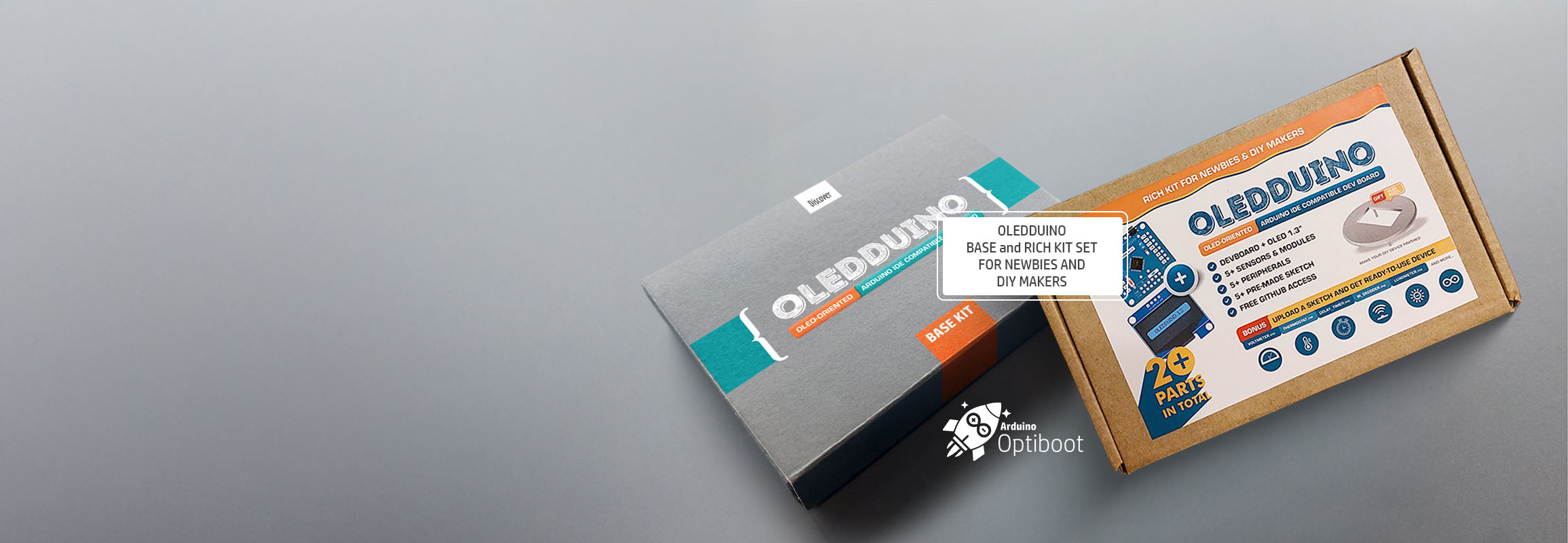

Oledduino Base Kit
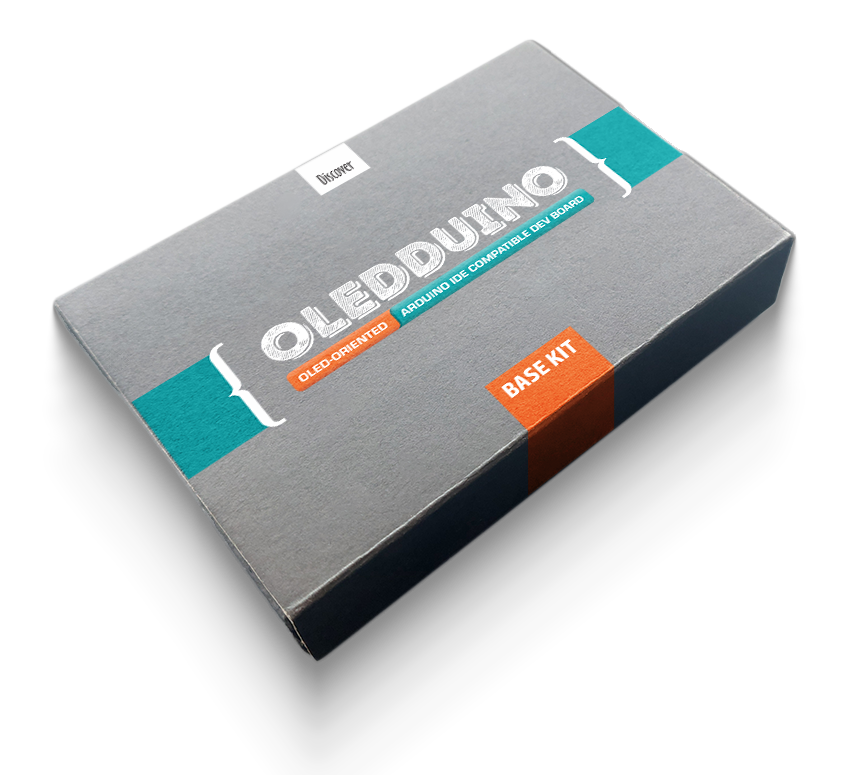
The BASE Kit includes:
- Oledduino devboard
- I2C OLED 1.3"
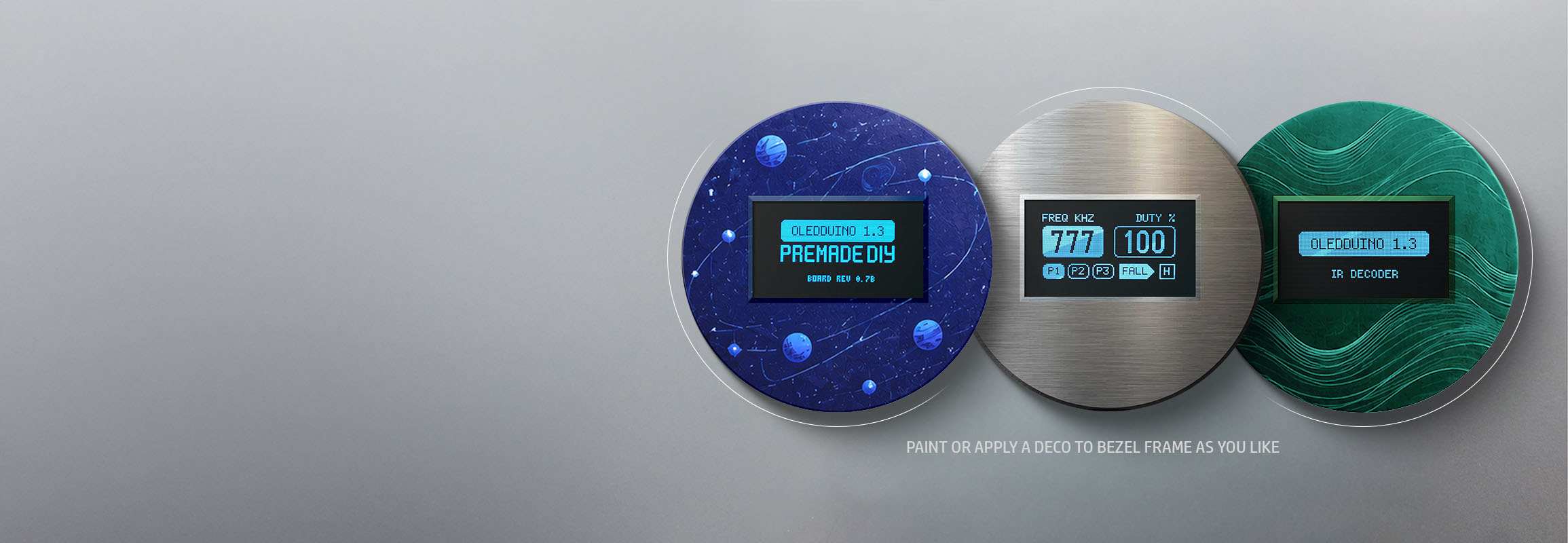
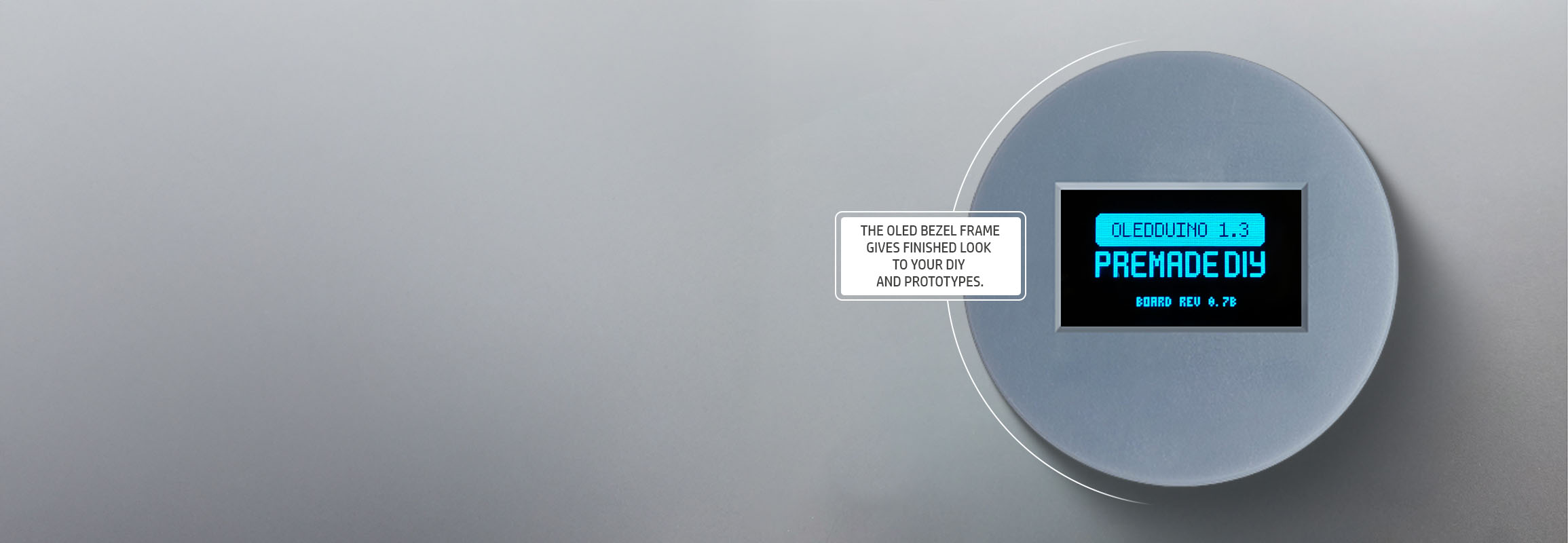
- Frame bezel
- Mounting parts
- Short instruction leaflet
- OEM package
Oledduino Rich Kit
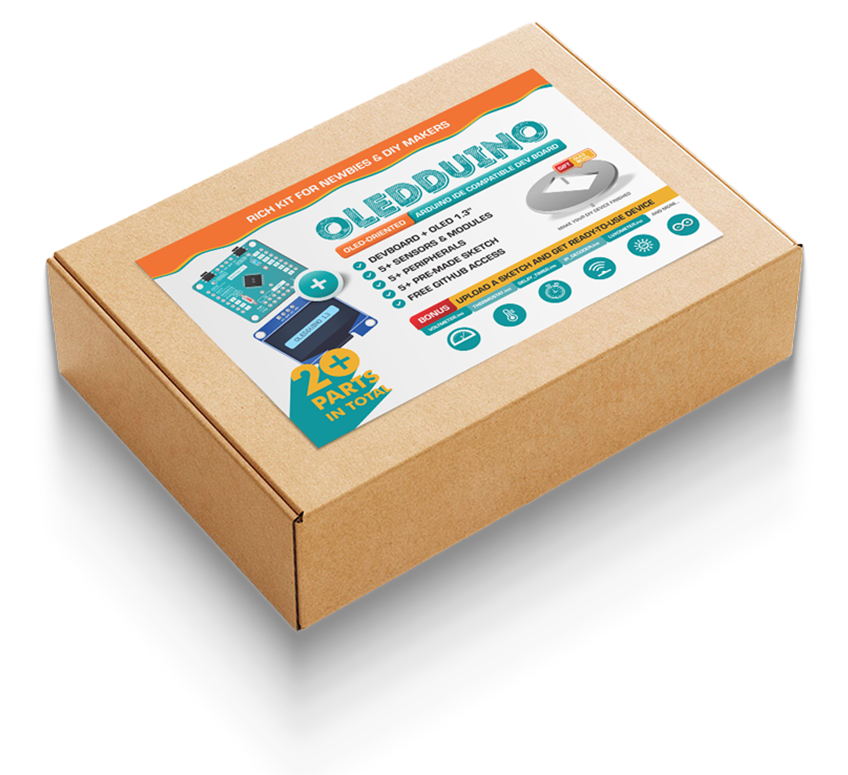
This kit includes:
-
Oledduino Base Kit and follow:
- CP2102 USB UART-TTL + 5-pin cable
- Sensors, buttons, relay, buzzer
- Encoder, trimpot, LEDs
- RTC, WS2812 matrix
- DCDC, Dupont, Breadboard
Privacy Policy
1. General Provisions
This Policy defines how the Site processes information about users. The Site operates on the principle of maximum anonymity: no registration is required to use the service.
2. Collection and Processing of Personal Data
Normal Browsing: The Site does not collect, request, or store email addresses, names, or other personal data of visitors.
Support/Feedback Form: Personal data (name and email) is processed only if the user has filled out the feedback form. This data is used exclusively to respond to the request.
3. Web Analytics Services
Third-party web analytics tools (e.g., Yandex Metrica, Google Analytics, etc.) may be used on the Site to improve the Sites performance and evaluate its traffic.
These services collect anonymized information about transitions and behavior on the Site without linking it to specific individuals.
Terms of Use
1. Subject of the Service and Access Rules
The Site provides universal firmware for Oledduino/Arduino boards in the public domain. The Service does not provide files for downloading to a hard drive. All software is downloaded to microcontrollers online through a browser using Web-Serial API technology.
2. User Rights and Obligations
The User undertakes to use the Site exclusively for lawful purposes. It is prohibited to take actions aimed at destabilizing the Site, servers, or bypassing security systems.
3. Limitation of Liabilit
The software (firmware) is provided on an "as is" (AS IS) basis, without any express or implied warranties.
The Site Administration solely determines the technical architecture of the firmware, including the selection of sensors used, the assignment of functional pins and their binding to specific GPIOs of the microcontroller.
The configuration and the order of pin assignments may be changed by the Administration at any time without prior notice to users. The current connection diagram is always reflected in the accompanying documentation for a specific firmware version. The user is obliged to independently compare the connection diagram of their equipment with the documentation before each online download.
The Site Administration is not responsible for any direct or indirect damage to equipment (Oledduino/Arduino boards, sensors, peripherals and the users PC) caused by the online firmware flashing process, code errors or connection failures. The user assumes all risks associated with connecting devices via the Web-Serial API and supplying power to the components.
Cookie Policy
1. What are cookies?
These are small text files that are stored on your device when you visit the Site to ensure its proper functioning.
2. What cookies do we use?
Technical (functional) cookies are necessary for the Site interface to function and remember your settings (for example, the selected theme or display options).
Analytical cookies are used by built-in visitor counters to collect statistics (which pages are popular, how much time users spent on the site). This data is anonymous.
3. Managing cookies
You can disable or delete cookies at any time in your browser settings. Please note that after disabling technical cookies, some functions of the Site may not work correctly.
About
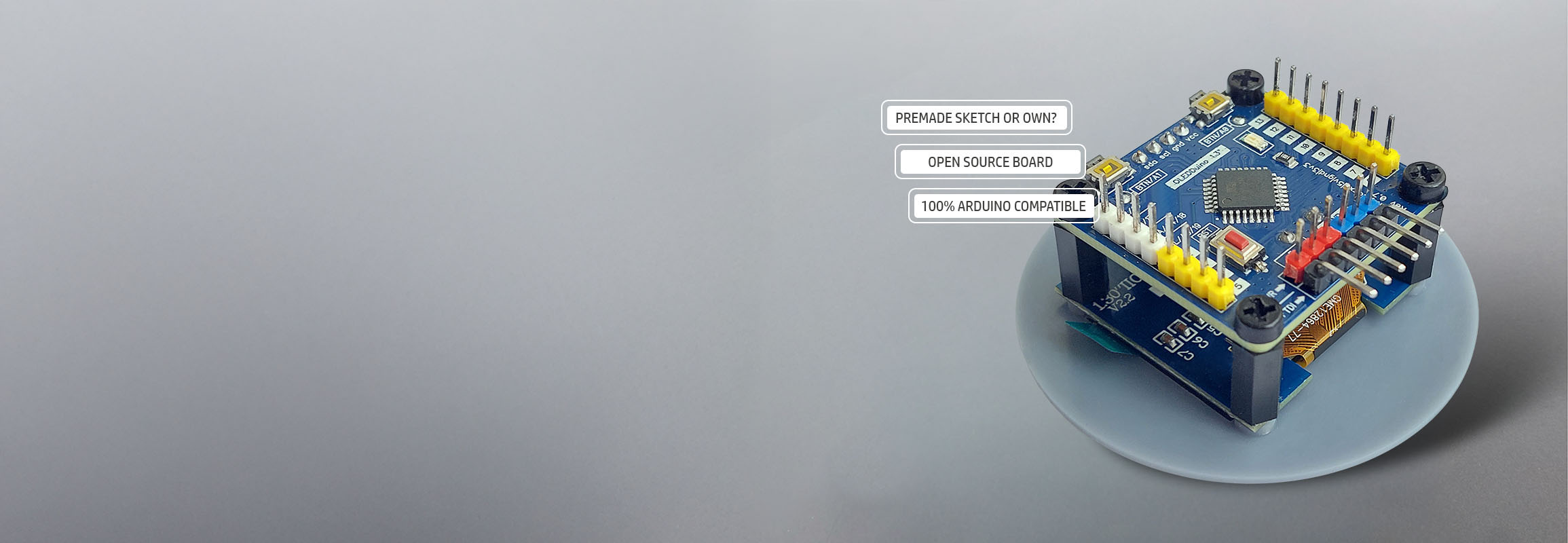
OLEDDUINO is an OLED-focused, 100% Arduino IDE-compatible development board. It is ideal for telemetry/measurement projects, automation, and any other project that requires displaying information.
The Rich Kit comes with sensors and everything you need to get started quickly. The kit also includes an OLED bezel, a front frame for mounting on the surface of the case, which gives a finished look to your DIY project or prototype. An ideal gift for a schoolchild, student, or DIY-maker.
It is important to note: Oledduino is not a closed system. It remains a tool for engineers, enthusiasts, and programmers who want to write their own code, experiment with peripherals, and expand functionality. The development board can be used without a screen, like a regular Arduino Nano/Mini.
IT'S JUST THE BEGINNING!